skip to main |
skip to sidebar
Showing posts with label
south afrikan literary awards.
Show all posts
Showing posts with label
south afrikan literary awards.
Show all posts
Why Lions Will Never Win Confrontations With Humans?
Professor Nhlanhla Maake related a story of a father who was daily telling his children old African folk tales about the lions and their human hunters. "The father always told them about how the lions would have resilience, they would fight back but at the end of the story the lions were always conquered by humans. Then one day the children asked their father, 'dad, why is it that all the time the lions are the conquered and there's never a time that the hunters lose the fight?' The father looked at his children and said, 'my children, until lions learn how to write their own stories, they will never win a single confrontation with humans". That set the theme for the third installment of the South African Literary Award which took place at Vodaworld on December 8th.  Scores of South African authors, prominent and less known were honoured at this glittering event that was graced by South Africa's deputy Minister of Arts and Culture Mantobazana Botha who delivered the keynote and other distinguished guests of honour from the writing and political fraternity. There was Dr Gomolemo Mokae, Dr Malindisi from Kanyamazane, Mpumalanga Public Works MEC Madala Masuku, Timbila founder and poet Vonani Bila, Caron Communications' Busi Ziqubu, Finnish journalist and photographer Mark Waller, Department of Arts and Culture's and author Siphiwo Mahala, journalist and author Flaxman Qoopane and many other important people.This year, contrary to two years ago when the awards were inaugurated in Polokwane and last year when they took place in Bloemfontein, there were three additional award categories. On its inaugural year there was only a lifetime achievement category that saw writers like Prof Es'kia Mphahlele, Miriam Tlali, James Matthews and many others honoured. This year a new category, the K Sello Duiker Memorial Award for Young Writers was introduced. It is in honour of the passed on author of 13Cents, The Quiet Violence of Dreams and another posthumous novel. Literary Journalism Award was also introduced and sponsored by Sowetan and the Nadine Gordimer Short Story Award for Writing in African languages.Nadine Gordimer, a Nobel Award laureate was honoured during the inaugural installment of the awards two years ago. She is now honoured through an award which only recognises writing in nine of South Africa's languages. Speaking during the awards Gordimer once again urged young writers today to ease a little bit on promoting a language that has thousands of authors scattered all over the world to promote but rather focus on their small languages which are threatened by globalisation. She does not recognise Afrikaans as an indigenous language and as such literature in it does not stand to scoop any of the awards that she dishes out.Gordimer futher warned that it has become more imperative for Africans to embrace their own languages and to use them to express their reaction to the world around them. She said that those were called mother tongue because they are the first languages that every child heard at birth. She called for the affirmation of the official nine indigenous South African languages.
 The Nadine Gordimer award went to Otty Nxumalo (69), a career educations and bureaucrat who has also published scores of novels, short stories and poetry, most notably being the authorised biography of Zulu King Goodwill Zwelithini. According to information supplied by writesAssociates, Nxumalo holds degrees from University of South Africa, University of Zululand and Havard University and has taught in various institutions including Governor's School in New Jersey, Lesley College, Havard University and UKZN.Mikhomazi Ngobeni (35) took home the K. Sello Duiker award for his xiTsonga writings, most notably Ndzeko wa Rixaka. His other memorable works include Hakunene Tiko ri file, Timbangi ta vutomi, Xigwitsirisi xa malovisi, Xitlati xa Vatsonga, Swihundla xa Vutomi and Mbhombela. Ngobeni was nominated in this category alongside Madams author Zukiswa Wanner and Niq Mhlongo (Dog eat Dog). Prior to the award the Judah Duiker, the late Kabelo's father delivered a heartwarming 'belated eulogy' of his son and his achievements, including that he was the first one to learn how to swim in the Duiker household.Notable contributors to the literary landscape were honoured with a Lifetime Achievement Award. Amongst them were Tsotsi author Athol Fugard (65), Freedom Park CEO Mongane Wally Serote (63), prolific author of The Hajji Mr Ahmed Essop (76), Kubantwana Babantwana Bam' author Sindiwe Magona, veteran wordsmith Mbuyiseni Oswald Mtshali (67), Stephen Gray (66), Gladys Thomas who capped her winning by reciting a poem for all the women and a few others.
 Three authors shared the Literary Posthomous Award, amongst them Welcome to Our Hillbrow author Phaswane Mpe and Sipho Sepamla (The Soweto I love) and Dalene Matthee (Fiela se Kind).The highly contested turf was the new Literary Journalism Award which was jointly won by Victor Dlamini for his book club and podcasts and veteran writer Bongani Madondo who is reported to be the only journalist to have interviewed the late Brenda Fassie for over sixty hours. Now Dlamini is quite interesting because not only is he a book worm but a serious media player. He is director of Chillibush Advertising Agency and co-director of Dlamini-Weil Communications, the big firm with the Vodacom Journalist of the Year Award contract. Madondo is a feature writer for Sunday Times Lifestyle and is the author of Hot Type. Recently his works can be found in the new Empire magazine.writesAssociates, which organises the award together with the Department of Arts and Culture and Sowetan and SABC as media sponsors announced that next year there will be another category for Television and Radio scriptwriting. While the language was not disclosed, it is only believed that the SABC mandate to the majority of the country's residency will be reflected through the criteria.Executive Director of the awards Raks Morakabe said that he has ambitions that the awards should become as prestigious as the Nobel Award and every writer should aspire to win a South African Literary Award. Well if December 8th's event was anything to go by, they are getting there.The programme was directed by Motsumi Makhene and entertainment provided by veteran Themba Mkhize and Friends, poetry by Mphela Makgoba, dance by African Theatre Dance Group, saxophone by Bongani Moloi and Drums by Lucas Bonoko. And the lions might be able to tell their stories of massive conquests over humans immediately humans stop writing. History is always written by the conquerers.
WHEN SOUTH AFRIKA CELEBRATED ITS OWN
In the wake of the Cape Town Book Fair next month Kasiekulture retrieves from its archives an article written two years ago about South Afrikan literary landscape.
South Afrika’s collective literary conscience stands at a pivotal terrain where it has to express its existence by championing the revival of the reading culture in the whole of the continent and beyond. It is a known fact that most African countries are ahead of South Africa when it comes to valuing the written word, but with the strides being made in compensating wordsmiths in this country, it should be a sign that the bar is being raised once again. It is at trying times like these that South Afrikans are once again summoned to bear witness to the triumph of their
 undying spirit, as archived in books, from its conquest of apartheid and other obstructive hurdles of yesteryears to now. Such moments need to be celebrated even many years down the line, which can only be possible if they are documented.
Never again will Afro-pessimists find enough ammunition to attack the ability of the South Afrikan literary honchos to articulate issues facing this nation in writings and other artforms. Such a response to the challenge is refreshing. The determination is here and the drive is limitless. Fault-finding triggered by self-hate can no longer be solace enough for people bent on finding fault in everything produced by Afrikans for the world. Afrikans are urged to love the beauty of their dreams since it’s not everyday that they dream a beautiful achievable dream.
All the above philosophies and statements are an attempt to capture in vivid detail the contextual meaning of the inaugural South Afrikan Literary Lifetime Achievement Awards held two years ago at Polokwane’s Gateway Airport Conference Hall.
With the theme for the glittering night being an unmentioned celebration of all things beautiful, the organizer, wRites associates’ Raks Morakabe Seakhoa was quick to mention that the function to launch what was then billed to be an annual premier award ceremony in this country’s arts calendar was "a baby just been born to celebrate greatness in our literary world". His truthful sensitive, yet probing touching of South Afrika’s collective guilt of Afro-pessimism was greeted with much applause. Seakhoa said, "as South Afrikans we tend to celebrate more what’s from outside than what’s inside". His sentiments couldn’t have rung truer in a country that spends most of its money buying everything foreign because it is imported and believed to be superior while they shy away from anything that looks or resembles them. J.K. Rowlings is bigger than Prof Zakes Mda even though the realities they are both writing about are relevant to their countries of birth. However, Mda’s country of birth does not relate to the aesthetic of his interpretations of such a society while, meanwhile Rowling’s setting is imaginary, it tends to strike the right chord with the same people alienated from Mda.
The auspicious launch meant to unbundle and debunk the myth or mystery was an event that attracted the who’s who of the art world, with the notable presence of Dr Gomolemo Mokae, Prof Itumeleng Mosala and former City Press Features Editor and now Spokesperson at Arts and Culture, Sandile Memela. The presence of the latter two was unavoidable, very much since the Department of Arts and Culture is and if word is to be believed, will continue to be a partner in the celebration. Prof Mosala was the Director General of the department at the time and spoke eloquently about the aesthetic of African literature in his introduction for the minister.
The emphasis for the launch edition of the awards was to celebrate "those who have walked the path before us". Those who have set the foundation, it was mentioned are remembered not only by presenting them with statuettes and trophies to celebrate the contribution they made to keeping the consciousness of the country alive and well in trying times but also by associating their legacies with foundations and accolades that will launch other literary giants. Just as Professor Mazisi Kunene (RIP) was earlier on the year awarded the National Poet Laureate Award, authors like the late Sello K Duiker now have the Sello Duiker Literary Memorial Award to keep their legacy alive beyond their short lives.
One of the great stalwart authors who were being celebrated on the night was 1991 Nobel Award winner for Literature Nadine Gordimer, who already has the Nadine Gordimer Award for Indigenous Writing started in her honour. During the launch her struggle to get literacy against an illness she suffered as a young girl was explored and her almost co-incidental confrontation with books used as an example of how people can use small spaces to paint big pictures.
Author Miriam Tlali, who very few people will know that she is the first South African black woman to write a book in English used the occasion to sensitize the guests to an issue that she once raised in Port Elizabeth. She echoed that being honoured in many countries for her writings, as is the case with lots of her prolific works does not compare with finally being acknowledged as being amongst the best by her own people. Her unwavering stance and commitment to the truth even in the face of harassment, demands to self-censor and banning of her works was applauded as a "celebration of the human spirit", or triumph of it thereof.
The main address of the night was left to Minister of Arts and Culture Dr Pallo Jordan whose tracing of the history of African literature throughout the recorded and non-recorded evolution of humankind took the guests to another intellectual level. Jordan, a scholar and contextual thinker said, "artistic creation is an important dimension of the edge to answer the question, why?" He was alluding to how the curiosity of the human species has always led to it trying to find new ways of not only archiving but also recording their contribution to civilization at any given epoch of its existence. Greek mythology and Egyptology might not be acknowledged as important aspects of today’s civilization, however the Minister touched into their influence in an explanatory manner that indicated how indebted to past civilizations is the five billion lives today.
The relationship between colonization and Christianity couldn’t escape unexplored at length. Jordan then acknowledged the importance of the South African Literary Awards "in recognition of their (artists) contribution to South African literature".
The outstanding over 75 years old individuals who showed resilience against all imaginable odds and triumphed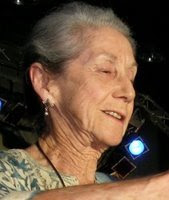 over gagging and banning who were honoured were novelist and a well k
 nown critic of the policies of the former racist government Gordimer. On her acceptance speech she once again wore the political mantle when she matter of factly mentioned that "when I won the Nobel award in 1991, the state president then Mr. F.W. de Klerk did not even send me a congratulatory note". Such apathy seemed to tear into her frail frame. She then added that it was primarily the reason why she was humbled by the award because it was a sign that her country recognizes beauty when it sees one and makes efforts to celebrate it.
The highlight of the evening came when Dr T.M Maumela received his Literary Lifetime Achievement Award and used the opportunity to remind all and sundry that while ten years of democracy can be said to be a milestone, there are some languages which are still treated in the same manner as the Bantustan system used to. Maumela, who authored 46 tshiVenda books with only one translated to English said, "there is only 15 minutes allocated to xiTsonga and tshiVhenda on television. If Monday it’s xiTsonga the following day it’s tshiVhenda. I think it is unfair that our languages are neglected in this manner. I hope that with this award the television people will increase the time they allocate to these two languages". It was sad and humbling, coming from an old man who has matured through all the levels of dispossession and who is now surprised that his old bones might see the grave before parity is applied in dealing with all languages.
Poet-author James Matthews’ daughter received his award on his behalf and suddenly announced that her father and her son couldn’t make it because they were in Cuba where Matthews went to formally thank the Cuban people for the support they offered to South Africans during their struggle against disenfranchisement.
Ellen Khuzwayo and Prof Denis Brutus were also honoured in absentia. A representative of Kopano Reading Club which was founded by Professor Es’kia Mphahlele received an award on behalf of the professor who was reported to be in India. Also honoured, and whose grandson availed himself to represent the proud legacy of her grandmother was Nontando Noni Helen Jabavu. Modikoe Dikobe’s sterling works were also acknowledged with a Lifetime Achiever award.
Another highlight and humbling moment of the evening was when minister Jordan had to dismount the stage to present extremely old and frail E.S. Madima with his award. The old man’s wisdom and wine-maturity echoed when he had word with the minister about writers also needing to eat, soliciting a grin out of Jordan.
"The launch of the South African Literary Awards and the conferment of the Achievement Literary Awards is a long overdue development," the Minister said in an earlier report.
Ten special South Africans who went the extra mile received their awards, as a sign that South Africa knows how to celebrate its own, and Afro-pessimism has no place in a country so rich with literary greats who will still be honoured for years to come. The future will see another batch of authors and poets honoured, with more categories and fanfare to express the unwavering adoration for the beauty of the written word.
* A lot has happened since then with many young authors accepting the torch from the old school and carving its own route in the literary landscape. Since 2005 there has been a fledging plethora of authors like Bongani Madondo (Hot Type...), Siphiwo Mahala, Kgebetli Moele (Room 207), Mmatshilo Motsei (The Kanga and the Kangaroo Court), Nokuthula Mazibuko (Spring Offensive), Morabo Morojele (How we buried Puso), Eric Miyeni (O'Mandigo; The Only Black at a Dinner Table) and many others.
 Scores of South African authors, prominent and less known were honoured at this glittering event that was graced by South Africa's deputy Minister of Arts and Culture Mantobazana Botha who delivered the keynote and other distinguished guests of honour from the writing and political fraternity. There was Dr Gomolemo Mokae, Dr Malindisi from Kanyamazane, Mpumalanga Public Works MEC Madala Masuku, Timbila founder and poet Vonani Bila, Caron Communications' Busi Ziqubu, Finnish journalist and photographer Mark Waller, Department of Arts and Culture's and author Siphiwo Mahala, journalist and author Flaxman Qoopane and many other important people.
 The Nadine Gordimer award went to Otty Nxumalo (69), a career educations and bureaucrat who has also published scores of novels, short stories and poetry, most notably being the authorised biography of Zulu King Goodwill Zwelithini. According to information supplied by writesAssociates, Nxumalo holds degrees from University of South Africa, University of Zululand and Havard University and has taught in various institutions including Governor's School in New Jersey, Lesley College, Havard University and UKZN.
 Three authors shared the Literary Posthomous Award, amongst them Welcome to Our Hillbrow author Phaswane Mpe and Sipho Sepamla (The Soweto I love) and Dalene Matthee (Fiela se Kind).