Showing posts with label goodenough mashego. Show all posts

4/9/14

Noah Review

The Bible Reloaded - Noah Review


As a Calvinised kid growing up years ago I have always wondered how some of the Bible stories I grew up reading would look like if they were made into films. Having read every Bible story from Genesis to Revelation my curiosity was like a hunger difficult to please. So when I was in primary school they showed us the story of the famous Jewish King David as a boy and how he killed Goliath with a sling. How I loved that story and the symbolism behind it; nothing in me questioned the point behind the cinematographic narrative. I believe nobody is looking at that; especially given that even the symbolism gets lost. Nobody looks at Goliath as a country with a nuclear weapons, a capable airforce and highly trained soldiers that gets beaten by a sling called Boycott, Disinvest and Sanction.

Okay, politics aside; I went to watch Noah a few days after it debuted in South Africa to little fanfare. This could be owing to the secular nature of our society. Noah's story is a Biblical tale which does not carry the same weight within the Hindu, Muslim and other native faiths. So, not enough bums on seats could be expected in a country fractured across many lines. So, when I finally went to the Brooklyn Ster Kinekor theatre in Pretoria there was only a handful of us in a theatre built to accommodate hundreds. I thought most of the people in there were actually researchers and church elders wanting to advise their flock from the comfort of the pulpit whether they should go watch or ignore. I was there to watch after reading an article in TIME magazine about the number of versions that went through the eyes of padres, pastors and evangelists to find the right mix.

My conclusion after sitting through the two hours of the film with nondescript 3D glasses glued to my eyes is that the film is really an interesting attempt at reloading a Bible story. I know the story of Noah intimately and after watching Darrel Aronofsky's interpretation I felt proud of him for having took the mantle of a historian. Few so-called amateur filmmakers have such a spine. Few, like Mel Gibson with his The Passion of the Christ have tried and prevailed. It is a path dangerous to tread as there are many landmines laid there by Christian fundamentalist who have no comprehension of anthropology; but the abridged Bible tale.

So, for Aronofsky to screenwrite and direct is a brave act; kudos. However if his intention was really to bend the tale to suit a consumer audience, that audience is not going to be Christians. Noah - the film drifts so far away from the script that at the end of watching it I concluded that it's just another interesting film pretending to be set sourced from the Bible. It probably was sourced from a history book, maybe the biography of Noah, which I would like to put my hands on. Otherwise it's an interesting thumbsuck from Aronofsky.

Kudos should be given to the acting by the lead actor Russel Crowe who plays Noah. It was also refreshing to see the re-emergence of old Anthony Hopskins (Silence of the Lambs) playing the role of Noha's father. Credit should go to the make-up team for making him look like what God on film would look like and the screenwriter for portraying that character in an innocent-passive yet sage-like incarnation. The rest of the actors are brilliant; from a young to an older Shem and his wife, Ham and Japhet. Their roles were in a way consistent with what the Bible says excerpt that the film tries very hard to demonise Ham even before he saw the nudity of his sloshed dad. The film does not try to moralise about what's the point of Noah deciding to get sloshed when that was a conduct unbecoming in the eyes of God.

And maybe the film is an attempt at that Jewish narrative as to why everybody should accept defeat and forget about heavenly glory since Japhet and Ham's offspring was poisoned. All their loins could litter were wild seeds. However, it's quite interesting that this tale is not evidence of anything that is happening today. History has been so rudely bastardised over the years to the extent that nobody really knows if some truths are served in doses to support ethno-political narratives. Aronofaky'a direction of Noah is very political - especially given the state of negotiations at the Israeli-Palestinian debate. Some call it the Jewish-Arab conflict; if that was the case it would have been solved long time ago since both of them would have pleaded to being the descendants of Shem and being entitled to every blessing he got for concealing the shame of his father - as per Bible and Noah the film.

However the real kudos for the aesthetic of this film goes to the the make-up, special effects, SFX, sound effects and CGI teams. Half the film was computer generated, from the depiction of the creation, the sprouting of trees, the bursting of water, the animals entering the ark and everything that me as a young Calvinite couldn't imagine. I have wondered how the story of Noah was going to be told and when I watched the film I understood why it couldn't be told before computers were advanced enough to tell half of it. So, the CGI team deserve the Best Film award. Next is the sound effects which become  ear busters on a Dolby Digital surround sound theatre. The special effects are just out of this world and they are what makes this film great.

I would think Aronofsky is brave and his storytelling is brilliant. But I refuse to acknowledge him as a genius because this is our story as told by him; he reloads a lot of it to the point that some scenes just became alien to me and believe me I don't consider myself passive. I have my understanding of the story of creation and Eden and how it is told in this film defies the many books I have read on it. It's not as controversial as the Big Bang Theory but it will make people think.

We were  handful in a theatre built for hundreds but I really felt this is one of those stories that grow on you. It's not a blockbuster like Spiderman III but the kind of film which's success depends on what the pastors say in church after watching the film and holding their three day spiritual retreat to seek 'spiritual' direction on what to advice the flock on. This will become the talk of the town in a few weeks or months' time and that's when those Christian bums will fill the seats. One believes it will eventually recoup the millions pumped into it by Paramount.

Truthfully, since with a film like Noah I can only be truthful; I am giving this film a good score, for the artistic approach to the settting, the CGI, the wardrobe (even though I saw what looked like a pair of jeans worn by Shem's wife), SFX and the bravery of telling this story. I don't do fat lips; but if I was to give a statuette; here goes for six out of ten. There's always room for improvement Aronofsky my friend.


TO COMMENT ON THIS POST GO TO OUR FACEBOOK PAGE: THE Kasiekulture BLOG & write your comment on the wall

3/29/14

given mukwevho

When the prison gates were opened

Tshifhiwa Given Mukwevho spent eleven of his twenty-nine years jailed at various prisons including privately-owned Kutama Sinthumule Maximum Security Prison in Makhado. He was arrested in 2000 for breaking and stealing from various businesses in Makhado and slapped with a 22-years prison sentence.
Today he is out on parole which is frustrating. “Being a parolee means you cannot go to places of your will without first informing your probation officer. Even when it means going to a tuck shop, you must leave a message in case an officer finds you absent at home”, he says.
Mukwevho was born in Madombidzha village outside Makhado where he stayed with a single mother’ who was always off fending in Johannesburg’. He says while he ‘can’t cite any social conditions as a cause for my crimes’ he yearned for certain things and as nobody could provide for him he stole money from shops to buy clothes for himself.
At Kutama Mukwevho pursued creative writing through UNISA. “When I was released in 2010 the first person I met was a man who was going to become my publisher, Vonani Bila,” he remembers.
Through Timbila, Mukwevho has since published a collection of short stories titled A Traumatic Revenge. He’s happy that readers do not classify it as prison writing. By his own confession ‘the writer's physical being was inside, but the soul hovered somewhere in between with one eye glimpsing the outside life and the other witnessing the inside life.’
He is currently working on a manuscript titled The Violent Gestures of Life which is about life in prison, “The boy wanted to sodomise Bheki; that’s his claim anyway. Was there any need for Bheki to take a ghastly decision to stab him with a knife though? Was it the only decision to arrive at? It is likely his intention was to warn the new boy, send him away with the knowledge that if he continued demanding sex from other boys he might die sooner than he had expected”.
Mukwevho has become a sought-after ChiVenda poet. Last year he headlined the Polokwane Literary Festival and relates to temptations incarceration brings. “He (another inmate) gives you books, and even adds at least three new pens he has arranged from his connections. The next thing he sends a piece of note requesting exchange of love favours. Sodomy is not just a word: Sodomy invokes images of a man inserting his penis into your anus”, Mukwevho wrote in an essay.
His sanity was saved by a supply of reading material which chiselled the juvenile into an inmate poet who published eleven poems in Timbila 6. “I managed to write lots of stuff from within the prison walls and I cannot label myself a prison writer.” he adds. Amongst the throngs of people whose material he read was Bessie Head, Njabulo Ndebele, Andre Brink, Lufuno Ndlovu and Can Themba. Newspapers introduced him to Sello Duiker, Phaswane Mpe, Niq Mhlongo, Sandile Memela etc.
“Mac Manaka and David wa Maahlamela are two people whose poetry I encountered when I was in the single cells in Thohoyandou Prison. Wa Mahlamela's poetry was featured in Sowetan Sunday World's poetry page, while Mac's poetry and an interview appeared in S'camtho youth magazine,” he adds.
Elana Bergin, editor at University of Kwazulu-Natal Press who mentored Mukwevho since he was incarcerated testifies that there’s a lot of improvement in him. Bergin says Mukwevho has improved on his understanding of structure and his English. “He’s a brilliant poet. Has worked hard and improved a lot. I can say he is a very promising writer”, she says.
A free Mukwevho is currently negotiating a national publishing deal for his first novel. He lives with his partner and child in Makhado and writes for three local newspapers. 
“I was arrested at a very young age, so the prison experience taught me that I have got to work hard for everything I need in life. That's the reason why I was able to study hard and have a focus on life while I was still in jail”, he says.


TO COMMENT ON THIS POST GO TO OUR FACEBOOK PAGE: THE Kasiekulture BLOG & write your comment on the wall

oscar pistorius


Cry Me a Reeva - What did Reeva See in Oscar?

To be quite honest with you I have always wanted to post on Oscar Pistorius but shuddering a lil' bit when I look at the four legal brains procured to get him off the hook. I have been afraid that I might post something wrong and end up having Adv Barry Roux putting it to me while comedians make a joke about me and rappers find inspiration in my bluff. But after Friday's postponement I think I can take a week to speculate.
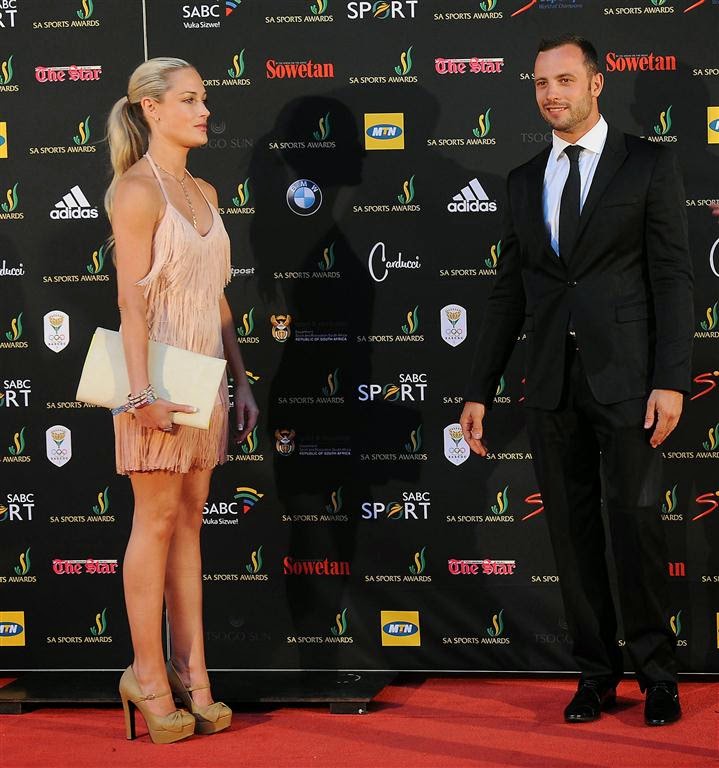
RED CARPET: Is it all there was to Oscar Pistorius and Reeva Steenkamp?
Truth is, I'm one of those who want justice to prevail against all odds in this trial. I truly have no interest in seeing Oscar going to prison or escaping responsibility; because his shrewd lawyer got him off by a technicality. If he's guilty he must go; if not he must walk, the same way it was the case President Jacob Zuma during his rape trial. So, I look at Roux (including Zuma's Kemp J Kemp) as that lawyer I will hire when I am facing 25 years in jail and I look at Nel as that prosecutor I would look forward to having prosecute a case inwhich I am on the good side.
So, it has been quite a good three weeks of a roller-coaster ride inwhich I, like international television would have lost interest if the State summoned all its 107 witnesses to testify. That the state called a few crucial ones and closed its case has renewed my interest in the debacle. Also, because while providing riveting viewing, the trial is a substitute for the International T20 World Cup taking place right now. Anytime Judge Thoko Masipa decides to shut us out of the gruesome evidence we can tune in to cricket and see another gruesome evidence of failure on the part of the Proteas selectors.
So, I have always wanted to write about paralympian Oscar. I love the chap; regardless of what he's accused of. He epitomises truimph of the human spirit. Everytime I go to shopping complexes in the sleepy towns of this country I am confronted by limbless folks at the entrances of grocery stores asking for pennies. I am confronted by blind folks begging for charity. One of them could have been Oscar; but no, Oscar has an Olympic Gold medal and was rumoured to make R20 million a year before the sponsorship plug was pulled. That's why I love the guy; his fighting spirit, his determination to win, his vigor and his passion for finer things in life.
On the same breath I love the Reeva Steenkamp story. I never had the opportunity to know the sassy model in her living years; only after her tragic death. Reeva is a picture puzzle I only know through pieces assembled by friends and family. Remember that there was a debate about whether the Tropica Island show that featured her should be screened or withdrawn. That decision brought us closer to Reeva; her disarming beauty, smile, her drive and passion. In a way we came close to seeing what is it that Oscar saw in her. She was probably his Gold medal, his 'Baba', something he could have that ordinary folks couldn't. It was twice as sweet for Oscar because here was a chap without feet who could scoop the prettiest wannabe model right at the nose of some of us with our two feet. So, it must have felt good to outrun us again.
Reeva was to Oscar what the Olympic Gold medal was to some of us. A medal we couldn't get because we are not even competing on that track. So, given Oscar's rage at losing a Gold medal in the London Olympic and complaining that the other chap's blades gave him an advantage; the potential for losing Reeva must have felt like that to young, rich and armed Oscar.
The chap might have had a fascination for firearms or might not but it's irrelevant today. His fascination is not his but it's white culture. The only thing real is that Reeva not only complemented but also completed the Oscar specimen.
Then we need to wonder what was in Oscar for Reeva. Money perhaps? For God's sake the chap did not even have feet and has been seen on SABC3' Top Billing canoodling with a sexy lass in Seychelles? There was evidence that the paralympian had a taste for finer things. It's natural, he's an athlete; think about all that adrenalin and wonder which one outlet can accommodate all of it? I tell you every cup would overflow and two to three would be needed.
So, as a layman who loved both Oscar and the character of Reeva I think it's inconceivable that a woman would still be dreaming of cracking it as a model at 29. Don't this girls crack it while still young and tender? 29 for someone trying to be  a model is the equivalent of a 39 years old woman trying to crack a first marriage. What I am actually saying here is that those are desperate times. Those are times that the desperate will do anything to crack it.
 So, here is Reeva noticing that Oscar stands on more red carpets than she does. She notices that half of what Oscar's revenue comes from is endorsements which in a way are as a result of the number of corporate and sporting events that he graces. Reeva notices that the media will always obsess with who Oscar is dating; and if she happens to be a pretty woman wanting to be a model that might open modeling doors for her. She thinks of a David-Victoria Beckham. Reeva notices that being closer to Oscar will get her attention and maybe; even at 29 she can still be a model after all, something she missed being at 21.
 That might explain why she stomached all the abuse which came to light in the state case. 90% passion and 10% abuse is the same as 90% abuse and 10% passion. Half of what Oscar allegedly did to her I doubt she would have stomached coming from me, someone who steps on two red carpets per year if I crack an invitation.
 For me, that was the making of that tragic relationship. There was never really a romantic relationship but a relationship of convenience for both of them. Oscar loved how Reeva made him feel while Reeva loved what Oscar's brand had the potential of doing for her own.

Oops, I finally wrote about Oscar; I still love him and don't understand the ANC Women's League's obsession with him. If only the ANCWL sat with every woman or girl in court over a rape, abuse and murder matter, we would have an improved dispensation of justice. The ANCWL would improve from being a burial society to a real advocacy organistion.


TO COMMENT ON THIS POST GO TO OUR FACEBOOK PAGE: THE Kasiekulture BLOG & write your comment on the wall

3/26/14

zimbabwe calling


Zimbabwe Calling: Updating my Activism


Sometimes I get quite disturbed by issues outside of my jurisdiction but which continue to violate my peace of mind. Which reminds me of some time ago when I was still a learner and saw in the staff room a poster which encouraged us to stomach things that we can’t change.
 I know I can’t change the situation in Zimbabwe but I refuse to stomach the status quo. Truth is that Zimbabwe is spoken about in the past tense. People discuss its glory as if it was sixty years ago. Truth be told, it’s not long ago when it was termed ‘the bread basket of Africa’. As a literature fundi I was intrigued by tales of the Harare Book Fair which was said to be the biggest in Africa and attracted luminaries such as Ngugi wa Thiong’o and other respected African thinkers and scholars.
 Zimbabwe was everything we wished post’ apartheid South Africa to be. The colonialists such as Ian Smith continued to live and cause noise in parliament. Thousands of English continued to farm the fertile, which to a certain extent was the reason it was the bread basket.
 But as we all know Zimbabwe did experience an economic slump, half brought about by economic sanctions imposed by the West and half by economic mismanagement by the ruling party. The West’s sanctions worked because Zanu-PF did not device a plan over so many years to run own affairs in the absence of the English.
 What I mean by this is that President Robert Mugabe, in his hundreds of international visits did not tag along enough experienced indigenous entrepreneurs to help in diversifying the economy of his country. The import/export/distribution/retail connections and contracts remained with the same colonists.
 Thus, when Zanu-PF implemented its controversial land redistribution plan it had figured out how to take a farm but not where/how to sell the produce to the international market. As a result fresh produce rot in storage, resulting in low sales and a domino effect of retrenchment which led to unemployment, poverty and the economic meltdown that saw millions cross borders to neighbouring countries.
 It can still be argued that the land redistribution programme was a super nationalist project. I went to Zimbabwe last year and spoke to journalists, NGO people and ordinary people and what I found was that it was good programme mismanaged for party political benefits.
 Sources told me that scores and scores of untrained Zanu-PF senior members were the real beneficiaries of the land process. Some were given farms they didn’t even have an intention of staying in. they continued to live in cities while owning vast tracts of land they didn’t farm; or couldn’t since the overheads were not circumvented by government.

 I was told that when hunger crept in and the public raised their concern they were silenced through secret police and Zanu-PF loyalists scattered in rural areas. That’s when the exodus started; no wonder it coincided with the rise of the Movement for Democratic Change. The more the MDC accelerated the more the iron grip intensified. Zanu-PF could see its sell-by date.
 That’s what I was told last year as I travelled to Mashonaland Central and past vast tracts of farmland some rumoured to be owned by Vice President Joyce Mujuru. I went past a mine, an army school, an intelligence centre, rural communities and fertile land which lay fallow.
 I revisited the Zimbabwe of my dreams again last week through a Skype conversation with progressive Zimbabwean journalist Robert Tapfumaneyi. We discussed how things were, how they are and how they can be.
 He was adamant that the political leadership in Africa has had a tendency to create problems for expediency objectives and then argue that they should be left alone to solve Africa’s problems.

 Responding to my observation that the reason why Zimbabwe’s solution remains elusive is because of the tribal make-up of the country whereby the Shona have been at the top of the feeding order for ages. He explained that when one looks at the MDC as it was when founded and even when it went to the elections last year there were skills from both tribes and such faultlines never showed up during electioneering, even on the MDC-N’s side, the faction led by Ndebele Welsh Ncube.
 My experience of Zimbabwe has been very much like that of Kenya whereby the moment you mention a person’s name; depending on the tribal identity of the person spoken to, they are quick to mention the tribe. It reminded me of the time I was in Kenya and I mentioned someone’s name and someone suddenly said, ‘oh, Kikuyu’. When I enquired after arriving back home I was told it’s because the Kikuyu are accused of being thieves. “They stole the whole Kenya, from Jomo Kenyatta to Uhuru Kenyatta”. Now, that’s not Africa for you, that’s paranoia and relic of colonial thought right there.

 Tapfumaneyi argues that not even assumed pragmatists such as Simba Makoni and Jonathan Moyo are not the solution. Makoni left Zanu-PF but some people believes he remains a party person through and through. His DNA is Zanu-PF. Moyo left and later returned to Uncle Bob’s party. Maybe his was a strategy that worked such as that of the young Zanu-PF motormouth Psychology.
 It seems the solution to Zim’s problem lies in opposition parties uniting to confront Zanu-PF like a scourge. There can’t be talk of business as usual while Zimbabwe does not have its own currency but transacts on USDollars and ZARands. Tapfumaneyi sees the meltdown as having started when NGOs where suddenly closed to centralise civil service responsibilities to government. In that context such services could be used to recruit Zanu-PF members and the much feared Green Bombers.
 Mugabe sent young Zimbabweans into a war for diamonds in the Democratic Republic of the Congo. He then allowed the situation to degenerate into a situation whereby the security architecture was made up of the army, police, Green Bombers and the unofficial magumaguma at the border who raped and killed those fleeing.
 In this chaos diamonds around Marange were stolen and lined pockets of party leaders. Finances from the Central Bank were looted to benefit the first family and close officials. These were allegations that the government couldn’t refute with facts. Spokesperson Brian Matongo, good at spinning was failing at spin.
 Tapfumaneyi sees the current debacle inside MDC not as an internal problem capable of disorganising the opposition but as a process that will separate the boys from the men.
 According to my source things have not improved since the elections. We all know the economic sanction are still to be lifted by the West that imposed them. Mugabe is old and tiring fast. Mujuru could contest the presidency but she has to win the party ticket.
 During my last visit to Zimbabwe some activists said Zanu-PF’s trump card of discrediting other political opponents by questioning their struggle credentials is getting tired. Tapfumaneyi also concurs that that chimurenga argument is becoming obsolete. “Chimurenga played its part but now we have people with a political understanding to can take this country forward”, I paraphrase. It’s something said by one 30-years old activist last year; “I’m thirty years old this year, this republic is thirty years old, where does Mugabe expect me to have fought the colonists?”
 I will provide another update someday soon. For now there are millions of Zimbabweans outside its borders who cannot go back because as Tapfumaneyi says, the situation does not inspire confidence 


TO COMMENT ON THIS POST GO TO OUR FACEBOOK PAGE: THE Kasiekulture BLOG & write your comment on the wall

3/13/14

erotica vs porn


Art that speaks in languages


Four years ago then Minister of Arts and Culture Lulu Xingwana angered artists when she snubbed an exhibition by renowned activist-photographer Zanele Muholi. 
 Muholi, whose photographs on issues affecting women in society usually stirs emotions told an arts blog, “I cannot say I am living to shock people. I am living to expose and also to educate. Sales, or no sales, it doesn’t matter to me – it has to be done”
 Xingwana interpreted visual depiction of lesbian intimacy ‘pornographic’ and her decision to walk away robbed her of an opportunity to understand the context of such work. What Mpumalanga painter Linda Shongwe calls artistic illiteracy resulted in the vandalism of Brett Murray’s painting of The Spear in 2012. It seems political leadership in South Africa has a problem understanding a language art should use in a post’apartheid society.
 Commenting on The Spear saga, Director of the National Arts Festival Ismail Mahomed said, “It is a sad day for SA particularly when we boast that our democracy was built on the historical legacy that the arts played a significant part in our fight against the past system.”
 31-years old artist Mary Sibande feels that one of the challenges facing artists post’apartheid is to find a visual voice with which they can be able to articulate issues closer to them. She says her consistent theme, which she explores with her alter-ego named Sophie has been to tell stories of her family. 
 “My grandmother had two African names. Since both of them couldn’t be pronounced by her employers when she worked as a domestic worker they called her Elsie. That story made me feel sad. The stripping of people’s identity because of what they did for a living was painful”, Sibande discloses. She adds that her grandmother had lots of dreams and wanted to be a teacher. “She wanted not to be a maid. So since I was born in the ‘80s I felt that through my art I needed to tell my great-grandmother and grandmother’s stories”
 Her stories, of colonialism and stolen identities are in reality relative to almost every Black South African family. Sibande’s alter ego, Sophie is an army of life-size sculpted dolls dressed in blue domestic worker overalls and aprons. Women being stripped of identity is a canvas for her work.
 However the artworks that emerged post’94, unlike traditional pieces about longing and nostalgia such as those of Gerald Sekoto which commemorated a dark era in South Africa, seems to sit uncomfortable with society while trying to advocate for the same wounded society. 
 Johannesburg arts curator Priscilla Jacobs has observed a running theme in most of the work she exhibits. “Contemporary art which is produced locally is reflective of the way life is at the moment. Visual artists are reflecting more the HIV/AIDS reality”, Jacobs says.
 Which is exactly what Muholi told Mahala about the portrait of a naked woman holding inflated condoms which she took on a Durban beach, “I wanted to articulate the lack of safe sex in our relationships. I have friends who are HIV positive or are still coming out and we still don’t have better methods [of contraception].”
 “I think with visual artists issues of women emancipation are being articulated given that it’s more about the subject matter, about what happens around them. Some is even more political” adds arts curator Eunice Rooi.
 The heavily varnished statuettes that zigzag the Newtown landscape narrate the story of contemporary Johannesburg. The miniature busts could easily be paying homage to the bronze statue of Brenda Fassie, which itself represents feminine greatness.
 Art, both visual and craft have for many years been archives of different epochs in the history of South Africa. The Polaroids shot by the late Alf Khumalo managed to communicate a whole history of a country’s people.
 Sophie represents many aspects of identity and society’s perception of beauty. “Beauty depends of what fills you. We must understand how much our identity was compromised. With curly hair you were not beautiful. There’s nothing wrong with wanting a certain look but identity plays a role”, Sibande says.


TO COMMENT ON THIS POST GO TO OUR FACEBOOK PAGE: THE Kasiekulture BLOG & write your comment on the wall

10/17/13

gudani ramikosi

Through The Eyes of the Child - Gudani Ramikosi


Very few writers are willing to take a step back and see the world through the eyes of a child. They view childhood as that formative stage that deserves no glory.

.
Gudani Ramikosi (fifth from left) at the Polokwane Literary Festival

That’s until you meet Gudani Ramikosi (30), a passionate author of children’s literature who regularly steps into those small shoes and seems to enjoy the walk. 
“When I was growing up there were lots of Ghanaian authors whose children’s stories I enjoyed. I remember the one about the death of a guitarist husband which’s twist at the end was both amusing and educational. I have always found children’s literature to be an important step in understanding African orature”, Gudani discloses. 
Interesting enough, her early years as a writer were not spent searching for stories to tell. She came into literature through poetry. “It’s easier coming out as a poet since you can voice what you think. That’s how I came out. However I am still interested in poetry, both writing and reading”, she says. For this MuVenda woman the medium she is most comfortable articulating in is her own mother tongue. Advocating for language, Gudani believes it’s only through Tshivenda that she can fully express herself better.
Gudani’s writings are based on Tshivenda myth and mythology. She credits her fascination with cultural themes on having undergone all the initiation rituals a MuVenda woman should before being certified mature for marriage. “It was in 2000 that I finally took part in the domba dance. I also underwent training for womenhood. I didn’t like it at first but I ended up enjoying”, Gudani says. The author adds that one thing that stood out for her during her initiation was the use of metaphors and symbols to emphasize issues such as sex, husband, parenthood etc.
Such use of metaphors fitted well into the manifestation of her early love for children literature and Venda culture. “It is transforming to accommodate the modern working woman and accept the leadership role that VhaVenda women play in the world today”. Metaphors also sparked her creativity to finally put the pen down.
“In 2009 I attended a Room To Read workshop held in Polokwane which is where I learnt about writing for children. While I always had stories to tell the structure was finally given during the workshop”, she confesses. Freshly inspired Gudani wrote Thilli’s Journey, a children’s book illustrated by Limpopo artist Jonas Mailula. Thili’s Journey is a story about a little girl’s adventures with fantastical superstition, folk and mythical beliefs that she has to conquer during her visit to her grandmother.
This brilliant Tshivenda book was translated into seven South African languages and a few overseas ones. Gudani is worried that few Black authors see value in talking to children, let alone in mother tongue. “We depend a lot on English literature. There’s actually few written by Africans”, she gripes.
Being married to Limpopo-based artist Vonani Bila and mothering two young boys, Mhlahlandlela (5) and Samora (3) Gudani says parenthood helped her to understand children’s fascination with animal characters in their stories. Both her sons are still at crèche but she reads them bedside stories from books she borrows at Makhado Library.
In 2012 Gudani published her second book titled in the sacred valley of the rising sun which was illustrated by Melvin Naidoo. The main character is Piggy, a domesticated monkey. It explores identity crisis in a society trapped in materialism and consumptionism.
Inspired by award-winning Dr Gcina Mhlophe and two SALA Lifetime Achievement winners from her village Gudani has an unpublished Tshivenda novelette and a novel manuscripts with the latter funded by the National Arts Council of South Africa. She also headlined the inaugural Polokwane Literary Festival in 2011 and has read her women empowerment poem Zwa uno muta in an episode of the SABC2 Tshivenda soapie Muvhango.
Listening to Gudani speak passionately about Tshivenda literature, poetry and orature it dawns that she was uncomfortable with being limited to the confines of Shirley Village in Elim, but chose to go where angels tread. “Parents should enjoy reading books for their children. Kids will never enjoy if they are not taught by their parents”, Gudani says.


TO COMMENT ON THIS POST GO TO OUR FACEBOOK PAGE: THE Kasiekulture BLOG & write your comment on the wall

7/23/13

moses seletisha


Curtain Call - Moses Seletisha

The late Professor Es’kia Mphahlele believed the silver lining apartheid provided was it allowing indigenous languages to flourish through investment in their development. This was not the case in other parts of colonial Africa.
In a post-apartheid South Africa there are complaints from language practitioners that the democratic government has little regard for Black languages. “I have seen groups growing and dying of hunger. It is the Department of Arts and Torture that is not doing us right at times. They will always tell you there is no sufficient budget”. Sepedi performance poet, playwright, actor, translator, writer and intellectual with a keen interest in African languages Moses Seletisha (27) protests. 
He is one of a growing number of young artists who choose to express themselves in their mother tongue because as he says, “why do you want me to speak your language when I have mine?”
Seletisha was born at Mooihoek Village in Tsimanyane. He grew up in Leeufontein next to Marble Hall in Limpopo Province.  By his confession his father passed on when he was five-years-old, leaving his mother to raise him, a brother and sister with her R500 a month wages. He remembers that his father worked in the mines and alleges his pension was squandered by his uncle. As a result he was raised by his grandparents Martha and Stephen Seletisha with whom he still lives.
His first literary awakening came when he was recruited by a theatre company. From here his formative stage mirrors that of most Limpopo artists. “During Heritage month I saw myself reciting my first poem ‘The University of The North’ which was a dedication to the late Prof. John Ruganda organised by University of Limpopo. The reception was too overwhelming and made me escalate my pen. At the same time I was serving as an actor performing at The Market Theatre Lab and National Arts Festival (Grahamstown)”
Seletisha prides himself on being ‘an old lion’. “My pen started making sense at the age of fifteen “ he says. However, for a 27-years old man who models himself after the doyens of Sepedi literature O.K. Matsepe and N.S Puleng it seems Seletisha is comfortable with not getting much attention. He has shared the stage as a poet with notable voices such as Vonani Bila, Lois Reeds, Lesego Rampolokeng, David Wa Maahlamela, Matete Motsoaledi, Mmatshilo Motsei, Antonio Lyons and many others.  “If it was not of poetry I would have become a murderer, I use it for verbal masturbation”, he confesses.
It however is not poetry that pays the bills in the Seletisha household. Stage is what he is known and famed for; often wowing crowds across provinces with his animated presence. He has been an artist for the better part of his adult life where he acquired experience working in different stage productions such as Kgorong (The Royal Court), Le kae letsoalo, Khupamarama (The Secret), Swana ya Mosate and The Way.
The big project of this prolific English to Sepedi translator is TÅ¡hutÅ¡humakgala (Coal-train). TÅ¡hutÅ¡humakgala is the biography of Frans Tlokwe Maserumule, a former Umkhonto we Sizwe combatant who is now a member of parliament. “A first black prisoner on Robben Island to get married in Pollsmoor Prison during the apartheid system. He was granted a 10-seconds honeymoon. Tlokwe is an unacknowledged hero of the liberation struggle in this country.” he says. Seletisha believes through this book Tlokwe, who still has bullets lodged in his body will finally be honoured.
The biography is edited by Motsoaledi and wa Maahlamela, both of whom Seletisha calls “my gods of poetry”. Foreword is by former APLA commander Letlapa Mphahlele. 
He swears by Bila. “He is one honest writer, his work contains the truth.” 
Himself, wa Maahlamela and Motsoaledi are the trio responsible for the renaissance of a language that is endangered by the emerging middle class which prefers foreign to native. Seletisha is optimistic, “The upcoming generation will also donate the tongues to add on the spice. Instead of investing in sex, alcohol and human trafficking, crime and all unprofitable activities.”


TO COMMENT ON THIS POST GO TO OUR FACEBOOK PAGE: THE Kasiekulture BLOG & write your comment on the wall

polokwane literary festival


Through the Eyes of the Child -  Gudani Ramikosi

Very few writers are willing to take a step back and see the world through the eyes of a child. They view childhood as that formative stage that deserves no glory. That’s until you meet Gudani Ramikosi (30), a passionate author of children’s literature who regularly steps into those small shoes and seems to enjoy the walk.
“When I was growing up there were lots of Ghanaian authors whose children’s stories I enjoyed. I remember the one about the death of a guitarist husband which’s twist at the end was both amusing and educational. I have always found children’s literature to be an important step in understanding African orature”, Gudani discloses. 
Interesting enough, her early years as a writer were not spent searching for stories to tell. She came into literature through poetry. “It’s easier coming out as a poet since you can voice what you think. That’s how I came out. However I am still interested in poetry, both writing and reading”, she says. For this MuVenda woman the medium she is most comfortable articulating in is her own mother tongue. Advocating for language, Gudani believes it’s only through Tshivenda that she can fully express herself better.
Gudani’s writings are based on Tshivenda myth and mythology. She credits her fascination with cultural themes on having undergone all the initiation rituals a MuVenda woman should before being certified mature for marriage. “It was in 2000 that I finally took part in the domba dance. I also underwent training for womenhood. I didn’t like it at first but I ended up enjoying”, Gudani says. The author adds that one thing that stood out for her during her initiation was the use of metaphors and symbols to emphasize issues such as sex, husband, parenthood etc.
Such use of metaphors fitted well into the manifestation of her early love for children literature and Venda culture. “It is transforming to accommodate the modern working woman and accept the leadership role that VhaVenda women play in the world today”. Metaphors also sparked her creativity to finally put the pen down.
“In 2009 I attended a Room To Read workshop held in Polokwane which is where I learnt about writing for children. While I always had stories to tell the structure was finally given during the workshop”, she confesses. Freshly inspired Gudani wrote Thilli’s Journey, a children’s book illustrated by Limpopo artist Jonas Mailula. Thili’s Journey is a story about a little girl’s adventures with fantastical superstition, folk and mythical beliefs that she has to conquer during her visit to her grandmother.
This brilliant Tshivenda book was translated into seven South African languages and a few overseas ones. Gudani is worried that few Black authors see value in talking to children, let alone in mother tongue. “We depend a lot on English literature. There’s actually few written by Africans”, she gripes.
Being married to Limpopo-based artist Vonani Bila and mothering two young boys, Mhlahlandlela (5) and Samora (3) Gudani says parenthood helped her to understand children’s fascination with animal characters in their stories. Both her sons are still at crèche but she reads them bedside stories from books she borrows at Makhado Library.
In 2012 Gudani published her second book titled in the sacred valley of the rising sun which was illustrated by Melvin Naidoo. The main character is Piggy, a domesticated monkey. It explores identity crisis in a society trapped in materialism and consumptionism.
Inspired by award-winning Dr Gcina Mhlophe and two SALA Lifetime Achievement winners from her village Gudani has an unpublished Tshivenda novelette and a novel manuscripts with the latter funded by the National Arts Council of South Africa. She also headlined the inaugural Polokwane Literary Festival in 2011 and has read her women empowerment poem Zwa uno muta in an episode of the SABC2 Tshivenda soapie Muvhango.
Listening to Gudani speak passionately about Tshivenda literature, poetry and orature it dawns that she was uncomfortable with being limited to the confines of Shirley Village in Elim, but chose to go where angels tread. “Parents should enjoy reading books for their children. Kids will never enjoy if they are not taught by their parents”, Gudani says.


TO COMMENT ON THIS POST GO TO OUR FACEBOOK PAGE: THE Kasiekulture BLOG & write your comment on the wall

4/12/12

REVIEW


Luv Ur Hood -Easter 2012


While some people were lounging in familiar spaces (such as 606, Valencia, Civilize etc) getting sloshed, chatting under-age girls and lying to each other about how much they have in their banks and what car they will be driving in Summer the Luv Ur Hood bunch (Khutso 'Katsuko' Malele and Hlompho 'Masta H' Lekhuleni) was out at Kabila's Car Wash doing what they do best - hook up a tight show irrespective of the limitations of bad sound and an incoherent line-up - actually rag-tag. Like they say in other countries, 'even without you (Whitney Houston) the show must go on'.


And go on it did; opening as usual with the anthem 'Batho ba a shota' which gets Mr Doo on his element. This comical emcee was this day flipping the coin with a huge wall clock strapped around his neck. He lapped the stage and delved deep into his Sepulana and Xitsonga delivery that pokes fun at other rappers - alive and dead. The line I love with passion is when he says 'rappers masturbate with Rama'. Hahahaha, you should have heard how he got the whole crowd eating out of his palm.


But Do is a drop in an deep ocean made up of different sets, such as those from Thulamahashe (C-Well, Tazzy Taz, PLZNT etc). Some enthusiasts awaited a performance by another Thulas cat called SK but true to the hustler culture of the ghetto he was nowhere to be seen - gathering cash somewhere in this vast region of Bushbuckridge. I however spotted Spotja, Junia and Gazzolin. Spotja dropped a few lines during the freestyle stage together with another rythmatic emcee whose participation only ended there. Junia was strolling around like a Don let loose in the Carribean and never bothered to sing.


Masta H and KFB also took to the stage. KFB flamed the mike with two songs that come ripped straight from the streets. For a change it was refreshing to hear him go beyond his beat influenced freestyles and rapping something one can tell was scripted, edited and delivered with love for the game and fans. Whoever makes KFB's music truly understands his sound - playalistic and suave. KFB knows how to play on the beat as one can hear him on the Mapulaneng Mixtape's 1,2,3 Mabhebeza; together with Young K-Cee.


Speaking of Young K-Cee, he has matured since the days of his novice primary school lines reminiscent of everything despised about the Dirty South. Even though his delivery is tight he needs to evolve beyond rythming about stuff he loves (money), stuff he is (sickest kid emcee) and stuff he wants to be (Young Moolah). This young emcee must broaden his vocabulary and start using other people's experience to inform his lyrics. Hearing someone singing about mohawks and skinny jeans can't make for an interesting album. Young K-Cee the Kid needs serious mentorship; which he might get from his cousin Masta H.


Masta H was at his element. Actually it should be a conflict of interest for me to write about H since I also manage him. But as a fan his delivery is always on point. My judgment of his maturity goes beyond just the songs he performed, which come from his Mapulaneng Mixtape but also a song he recently recorded with J.O.P, where the hook is an intoxicating classical piece by Sabs (Masaba). It's a wedding song that can hold its own in the august halls of Italy alongsinde Placido Domingo and Jose Carerra.


Bushbuckridge was represented by its dons, the gothic crew that drinks and smokes like nobody's business and have scary rythmes that can get a coward shying away from College View, Maviljan and other town's outskirts. Even in the absence of Android the crew still held it down. These dudes need to have a mixtape and market it hard. The streets are waiting.


Obviously Katsuko was there too, threatening to rap and only doing it impoptu. Surely being an emcee is not the easiest role one can play. Familiar faces such as Sparkle, Dialectic (who dropped a verse or two), Adorn the Poet (who was manning the Luv Ur Hood merchandise stand), Black Pearl (who was expected to perform but didn't), Software (hmmmmm) and many more. Luv Ur Hood Easter rocked and they are planning another one for Youth Day! Ayeye!


TO COMMENT ON THIS POST GO TO OUR FACEBOOK PAGE: THE Kasiekulture BLOG & write your comment on the wall

11/17/11

A Series of Undesirable Events - A Review

I am a strong advocate of non-conformity. I don’t believe in structure. I detest any template and reject any notion that anything is absolute. Even the truth is not because it is ‘the truth according to???’ whose perception of it might have been strongly influenced by the tide of the times. The events of any era produce their own truths and lies. And such truths become lies once the table turns. So, I protest that anything is gospel unless inspired by the Creator. And the Bible is not a book of literature but history.
Being a non-conformist, if I was to put together my twelve disciples there would be, among them Zukiswa Waanner (whose experimental style in Men of the South and her retake of Can Themba’s The Suit breaks conformity barriers), Kgebetli Moele (for his shrewd use of his poetic license in Book of the Dead), Tshwarelo Mogakane and until last week Deon-Simphiwe Skade.

Now I know you are familiar with some of the writers I have mentioned above and you wonder why would I want to put together a disciple unit of scribes some of you might call rebels? I deliberately omitted Siphiwo Mahala whose retake of The Suit (The Suit Revisited) is still one of those short stories I read to remind myself that Afrika is the cradle.

Now, Skade’s novella titled A Series of Undesirable Events is a peep-show into what this writer, who I have never met has in store for our literary landscape. I often get tired of justifying why I appraise some books and deliver positive judgments while I stump other like a badly translated Holy Book. Comrades, I am a literary adjudicator in the English panel of the South African Literary Awards (SALA) where I serve with a Doctor and a Professor and my competence to put forward an argument on literary merit is unchallenged. Your book becomes literature when we say so because we have read hundreds if not thousands of titles and we know what a good book read like.

And I dare say, A Series of Undesirable Events is a blerry brilliant story – though more could have been said between these 90 pages. Skade could have thrashed out details about his characters and added more flesh on the novella weighing 165 in a city where novellas die. Impressive because this novella does not face its demise but survives to be appraised.

Skade’s flirting relationship with his characters and their intricate stories robs the reader of any opportunity to fall in love with them, embrace them and peel more layers to discover their aesthetic. He tells us what they all do for a living, which is good and often shines through the narrative. He delves deep into that – especially towards the end when it’s just Moshe, Tumi and Tshitso who are reminiscing about lost friends and acquaintances over green bottles.

The poems accompanying the prose add a necessary colour to the canvas, and leaves the reader wondering why can’t they stand alone – without being adulterated by the prose.

I love Skade’s narrative because of what I call non-conformity. Throughout the 90 pages he manages to be all the characters in the novella and see the world through their eyes. He even manages to become someone as miscellaneous as Lorraine. He juggles being a man and a woman with a passion Waanner would be proud of. Waanner is three times all ‘men’ in Men of the South.

Skade’s book is so well-written I had to read it seven times before formulating this thesis. I don’t kiss ass (even when I get free books for my growing private library) and I am brave to say that Skade is a useful addition to our literature family. His story is set in a city very few people have tackled without touching on its pre’76 geo-political make-up (not make-over). Cape Town never changes – and Skade’s narrative is a testament of activism about this magnet with a table – the magnet that should be declared the 8th Wonder of the World for its eternal captivity in a time warp. The last European outpost in the South.

If this book pitched for any award I adjudicate it would have stood a chance to walk away with an accolade for creativity – depending on with whom will it be swimming. A worthy read I am comfortable to call – the first in a line of many. Even though it’s not mine.

Skade is extremely talented, his style seductive and the simplicity with which he tells the Undesirable Events addictive. Go buy it and read.

TO COMMENT ON THIS POST GO TO OUR FACEBOOK PAGE: THE Kasiekulture BLOG & write your comment on the wall

10/27/11

Spring meets Summer


I reckon you have been wondering why has Kasiekulture drawn to a yield in recent times. Don't stress comrades we are still here. The technicalities of the world since the Arab Spring has meant more clogging of the internet sytem. This here thing works like a heart and the more there is tension the more the veins get clocked and it slows down. But now I'm talking about the capitalist system. There seems to be some chap somewhere who is interested in making sure that anything coming out of fertile grounds for a revolution gets nipped at the bud.

They say what made the Arab Spring successful as opposed to the hundreds of African Springs over many years was the literacy rate in those countries. Immediately they started to protest they kept the world updated through social media such as Twitter and YouTube. They kept those images of brutality flowing and that is one of the reasons why the world stood behind them and eventually helped them topple their dictators. Well, while the same can't be said about South Afrika, however the jamming signals that roam our communities are a threat to our freedom of expression.

However that is not really the reason I have not been posting but it's one of them. I am back with a bang and you will receive your regular updates of our artistic and literary landscape here on Kasiekulture. I have been held down by adjudication of South Africa's beautiful literature and I have even forfeited to mention that I have completed a film titled Cast the First Stone which has already been flighted on Mzansi Magic.

Okay, stay posted. I am back with a bang!!!

TO COMMENT ON THIS POST GO TO OUR FACEBOOK PAGE: THE Kasiekulture BLOG & write your comment on the wall

8/9/11

!

In Any Colour


There are few things that paint can achieve. It can hide cracks on a wall but not the severity of the cracks. It can turn ugly structures into beautiful ones which’s value does not really improve but which can be delusion enough to warrant a higher currency while they shouldn’t. Paint can create colour that later becomes a multi-million rand identity. The Kaizer Chiefs’ black and gold colours are worth hundreds of millions on the market. Reportedly, Vodafone had to pay tens of millions to Cell C to have exclusive rights to use RED as the colour of their trademark. Cell C had no option but to shift to BLACK - which is perceived to be a negative colour.

South Africans have always had a unifying pastime – which later on becomes a national identity. Having a braai was (and still is) our pastime. We are a braaing nation. So, it was quite inspiring to see that on Mandela Day our age-old pastime was suddenly replaced by painting. The legacy of a human rights fighter as dignified as Mandela is suddenly reduced to 67-minutes of changing the colour of structures. South African Airways repainted the whole fleet to celebrate Nelson Rolihlahla Mandela 93rd birthday.

A weekend newspaper columnist alluded to this ‘cheapening’ of Mandela’s 67- years of being a freedom fighter. I concur that this whole hype of turning Mandela Day into Graffiti Day must be subjected to investigation.

We all know what Mandela Day should be but maybe we need to debate what it should not be. I watched in my neighbourhood and on television as scores of people flocked to schools, crèches, orphanages, clinics etc with paint and brushes over the weekend as their celebration of Mandela Day. I found the gesture quite noble. Those structures obviously would have used another coat or two, which is what the hordes of charitable South Africans provided.

However I was surprised to see community leaders in some areas converging to schools with questionable reputations with hundreds of litres of paint to gloss their reputations. They say ‘no matter how much lipstick you put on a frog it will remain as ugly as it is’. There are schools in Bushbuckridge whose reputation is teachers who sleep with learners and later get support from their unions when they are called to account. There are civic leaders and School Governing Body members in these communities who don’t want to hound these teachers because they don’t want to rock their fragile friendships.

And for me seeing the same hypocrites pretending to care by painting the same schools helped by the same teachers got me wondering if the 67-minutes couldn’t have been better spent discussing with these paedophiles asking why are they abusing their authority over teenage girls? What’s the point of covering cracks of a decaying moral fibre with oil paint when the decay will continue unabated?

I have seen politicians donating clothes, blankets, food and houses to the needy on Mandela Day. And what I have always observed is that none of them use their own money to extend this charity. They use government resources to buy credit for a service they should be delivering everyday – not only on July 18. People must use their own cash to show their gratitude to Mandela. Otherwise, all our activities will soon be as tired as the paint left on the walls, which might not stand the test of Spring.

It is futile to think that paint will wash the conscience of our nation and the sins committed behind classroom doors. All it will do is to hide our shame, conceal the cracks and once Mandela Day has lost its novelty – expose us for the hypocrites we really are.


TO COMMENT ON THIS POST GO TO OUR FACEBOOK PAGE: THE Kasiekulture BLOG & write your comment on the wall

REVIEW

Free At Last

Tshifhiwa Given Mukwevho spent eleven of his twenty-seven years of life imprisoned at Kutama Sinthumule Maximum Security Prison in Makhado. During these long captive years his spirit has roamed free as he found solace in his creative juices.

Mukwevho was released last November on parole. When he walked out he had already published his poetry in Timbila Volume 6, which was published in 2008. In one of his honest poems titled something, Mukwevho writes, “waking up/ early in the morning/ rushing to town to sell some carry bags, toothbrushes:/ small business means/ small money/ better off than stealing/ something that leads us to jail”

He is a creative soul who also writes short stories and novels. As if resembling the Biblical Jonah who was swallowed by a fish when he tried to dodge his calling Mukwevho pursued creative writing with UNISA while incarcerated. When he walked out last November a national publishing house had already offered to publish his first novel. The writer couldn’t be kept down as prison walls also failed to suffocate the writer in him.

Eight months after he was freed Mukwevho published his first collection of short stories titled A Traumatic Revenge. The book with the scary yet attractive cover is made up of eleven short stories critiquing society and how it conducts itself in different situations.

Jigsaw in the Sky is a heart-warming story about xenophobia towards Zimbabweans. It objectively enquires why people see the difference in the next instead of the similarity.

The kind of language we Speak tells the story of a student protest that ended with the death of a learner. Mukwevho’s versatility as a writer is explicit on this short story where the narrative is in first person and he successfully takes the role of a woman named Zodwa.

Defeated explores the abuse that some wealthy people subject vagrants when they offer them money to sodomise or even to watch them have sex with their dogs. While the story might raise racial temperatures, it’s the honesty with which the author narrates it that will melt even the coldest heart.

All Mukwevho’s stories have a moral to them. They are all rooted in society. Intriguing that he moves his storylines from town to town and even writes about inventions and innovations of the past ten years. Given that he spent all these years behind the ugly walls of Kutama Sinthumule, Mukwevho’s exceptional storytelling skills come out glaring. Few people would find inspiration in a space designed to break a man’s spirit.

A Traumatic Revenge sold a hundred copies at its Makhado launch a month ago and Mukwevho has indicated that he is willing to tour the country during the month of September to read in libraries and community centres.

Libraries wanting to invite Mukwevho for a reading of his book during September can arrange with his publisher at Timbila Publishing 015 291 2088 – Vonani Bila.


TO COMMENT ON THIS POST GO TO OUR FACEBOOK PAGE: THE Kasiekulture BLOG & write your comment on the wall

7/25/11

F-ck Rehab - The time-bomb finally explodes


How do you deter a time-bomb from ticking to explosion? There are actually two things to do. One; you find the detonator and figure out how the wires were fixed together, then you defuse it.Two; you don't stop it but you run away so that it explodes in your absence. Amy Winehouse was such a time-bomb. She has been ticking since she came into the music scene as a disturbed, vulnerable yet talented young girl who wanted to have fun. Fun for Amy meant activities which some of us who have only gone to the point of the herb call psychedelic stuff.

In writing their eulogies of the genius who joined Club 27 on Saturday (July 23) friends and journalists testified about her drug binges, her hatred -not fear of rehab and her lost soul attitude to life. She apparently failed to understand that Janis Joplin was full of life when she overdosed and died at the peak of her career. To her, and some of us who loved the Woodstock bunch Joplin was the closest thing to David playing his harp for King Saul. Yes, Joplin was brilliant, full of life, wanting to change to world but got high and fell to the ground. She died.

Amy just failed to draw a parallel between the Joplin years and hers. The 1960s were characterised by hippies, gypsies, love and peace movement and a psychedelic lifestyle that sufficed because almost the whole world was at war. So, the rebels could bonk, drink wine and smoke as many joints, valium, heroin, cocaine and bhudda all they wanted while politicians were focused on hating one another. The law enforcers were spooks trying to sniff KGB spies in the West. Anyone could have been anything.

But Amy lives now; the age of HIV, drug enforcement that sees specialised mercenaries deployed to bring down cartels and a technologically savvy world that one can have fun without leaving their room. Then her obsession with Jimi Hendrix. We, who were born earlier loved Jimmy with all our hears and felt bad when he - like fellow Wooodstocker overdosed and died. But you can bet your last dime that Jimmy didn't die to follow Janis. In the same breath you can bet that Nirvana frontman Kurt Cobain died to follow the two geniuses.

And now we have Amy who followed the three. Amy cried in her music and the world chose to ululate. She asked for help but we chose to relegate her fears of rehab as a gimmick. Damn it sold copies of records and made her a megastar. A megastar that died leaving all those millions. But Amy wanted to die and people should understand and accept that. She probably had a dangerous God-complex that misinformed her that she can live and die at her own whim.

Well, she lived and died at her own whim. And that is how we should all remember the genius that was Amy Winehouse. 'Fly away lil bird see I aint' shedding no tears'. Hope in her own weeded brain she joins Club 27 - the Orchestra Beyond and continues to make beautiful music.


TO COMMENT ON THIS POST GO TO OUR FACEBOOK PAGE: THE Kasiekulture BLOG & write your comment on the wall

7/17/11

!

A Test of Character for Obama

When Barack Obama came to power he made over-arching promises about what his presidency will achieve, not only for America but the rest of the world. Domestically he has had a few snags as he managed to pull off some of his promises regardless – but even with the best intentions it was always going to be difficult to turn a budget deficit into a surplus.

However some Africans feel that Obama has fallen short by not extending his grace to his grandmother’s continent. The visit by Michelle Obama is insignificant when judged against the impact that a full continental visit by the president would have achieved, not in instiling better governance but to boost the confidence of young African politicians confronted by old demagogue leaders who will forever have each other’s back – at the detriment of continental development.

There however are two things that Obama can do to cement his place in history and the hearts of all freedom, justice and peace-loving people. Obama must, before he steps from the plate use his presidential pardon to expunge the convictions of Black Panthers Mumia Abu Jamal and Assanta Shakur.

That Shakur has been exiled in Cuba for over thirty years while successive so-called Democratic Negro-friendly administrations come and go is justice’s worst travesty. When asked what freedom is, Shakur said “I know a whole lot more about what freedom isn’t, than what it is, ‘cause I’ve never been free”. It’s an indictment on the American brag of being ‘a land of the free’ when one of its daughters knows not its definition.

Abu Jamal’s case has been frustrated by countless rightwing judges not to be brought to a review. And for the once promising radio journalist to languish in prison for allegedly trumped-up charges while Obama tries to convince the world that he is leading the beacon of freedom will not work for his legacy – him being a lawyer.


TO COMMENT ON THIS POST GO TO OUR FACEBOOK PAGE: THE Kasiekulture BLOG & write your comment on the wall